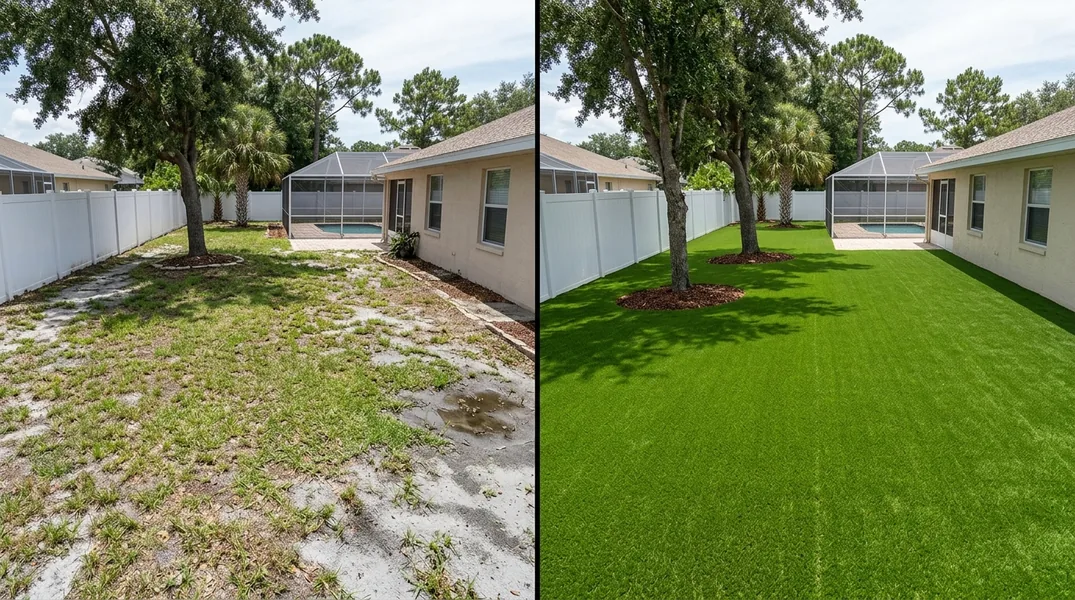
Understanding Palm Bay's Unique Drainage Challenges
Palm Bay sits in Florida's Brevard County, where sandy soils and a naturally high water table create unique challenges for any landscaping project. If you're considering Residential Artificial Grass Installation, understanding these environmental factors is essential to ensuring your investment lasts for years without pooling water, mold growth, or base deterioration.
The sandy composition of Palm Bay soil drains quickly in some situations, but the high water table means groundwater sits closer to the surface than in other Florida regions. During heavy rains or the wet season, water can rise rapidly, saturating the ground beneath your turf. Without proper preparation, this moisture creates an environment where bacteria and mold thrive, compromising both the artificial grass and the materials underneath. The key to a successful installation is working with this environment rather than against it, using proven drainage solutions and quality base materials.
What to Put Under Artificial Grass: The Foundation Matters
The materials you place beneath artificial grass are just as important as the turf itself. Many homeowners don't realize that what to put under artificial grass directly impacts how long your installation will last and how well it performs in wet conditions. In Palm Bay, where moisture is a constant concern, the wrong base can lead to expensive repairs within just a few years.
Professional installers typically use a layered approach. The first layer is usually crushed limestone or recycled asphalt, which provides a stable, compacted foundation. Above that comes a geotextile fabric that prevents sand from mixing with drainage layers while still allowing water to flow through. Then comes the primary drainage layer, often made of crushed stone or recycled rubber, which creates air pockets and channels for water movement. Finally, an artificial grass underlay or drainage mat sits directly beneath the turf. This underlay is engineered to channel water away from the grass fibers and down through the base layers, preventing puddles and extending the life of your installation.
Turf Base Prep: The Critical First Step
Turf base prep is where the success or failure of your artificial grass installation is determined. Even the highest quality turf will fail if the base isn't properly prepared. The process begins with a site assessment to understand your specific drainage situation, soil composition, and water table depth. Professional installers in Palm Bay will evaluate how water currently moves across your yard and identify low spots where water tends to collect.
Once the assessment is complete, the existing soil is typically removed to a depth of four to six inches, depending on the property's drainage characteristics and the high water table level. The excavated area is then graded to ensure proper slope, typically one to two percent, which directs water away from structures and toward drainage zones. The base layers are then installed and compacted in stages. Compaction is crucial because it prevents settling, which can create new low spots and drainage problems months after installation. Each layer must be properly compacted before the next layer is added, creating a stable, well-draining foundation that will support your artificial grass for 15 to 20 years or more.
Artificial Grass Drainage Systems for High Water Tables
In areas with high water tables like Palm Bay, a standard base prep isn't always enough. You may need a specialized artificial grass drainage system that actively manages water. French drains, subsurface drainage pipes, and perforated underbeds are common solutions for properties where water accumulation is a persistent problem. These systems work by intercepting water before it can saturate the base layers and directing it to a designated drainage area or away from your home's foundation.
A French drain system involves a trench filled with gravel and a perforated drainage pipe that sits beneath or alongside the artificial grass installation. Water flows into the gravel, then into the pipe, and is directed away from the problem area. For residential properties, this solution is often combined with the layered base system described earlier, creating a comprehensive approach to water management. Some installations also use a permeable base layer made of recycled rubber or specialized drainage mats that are even more effective at moving water quickly through the system. The investment in a proper drainage system now prevents costly repairs and replacement down the road.
Common Mistakes to Avoid During Base Preparation
Homeowners and inexperienced installers often make mistakes during base prep that lead to problems months or years later. One of the most common errors is failing to compact the base layers sufficiently. Without proper compaction, the base settles unevenly, creating low spots where water pools and grass sinks. Another frequent mistake is using poor quality fill materials or skipping the geotextile fabric layer entirely. This allows sand to migrate into drainage layers, clogging them and reducing their effectiveness. Inadequate grading is another problem; if the slope isn't steep enough or is graded in the wrong direction, water won't drain away but instead flows toward your home or collects in depressions.
Many DIY installations also fail because they underestimate the importance of the artificial grass underlay. Using a cheap, thin underlay or skipping this layer altogether might save money upfront, but it guarantees drainage problems. The underlay is engineered to manage water flow, and cutting corners here is a false economy. Additionally, some installers fail to account for Palm Bay's specific water table level, installing a base system that works in other Florida locations but isn't suited to your property's unique conditions. This is why working with experienced local professionals who understand the regional challenges is so important.
Getting Professional Base Prep and Drainage Installation in Palm Bay
Given the complexity of proper drainage and base preparation, especially in an area with a high water table, hiring experienced professionals is the smartest investment you can make. Palm Bay Turf Installation has years of experience working with local soil conditions, water tables, and weather patterns. Our team knows exactly what to put under artificial grass in Palm Bay and how to prepare your specific property for long-term success.
Whether you're interested in Residential Artificial Grass Installation, Pet Turf & Dog Run Installation, Pool Surround Turf, or Putting Green Installation, proper base prep is non-negotiable. We start every project with a thorough site assessment, then design a drainage and base system tailored to your property's needs and your budget. Our installation process follows industry best practices, with each layer properly compacted and inspected before moving to the next stage. To learn more about how we can ensure your artificial grass installation succeeds despite Palm Bay's challenging conditions, contact us today at (321) 338-1532 or visit our website for a free estimate. We're ready to help you create a beautiful, durable landscape that will thrive for years to come.
Looking for a professional artificial grass installation company in Palm Bay? Palm Bay Turf Installation responds fast for all your artificial grass installation needs.
Get a Free Quote